

On...Ballet?

On…Ballet?
So here I am, in my second hour of sitting at the Austin airport, waiting for a flight that may never come, and I’m feeling pulled to write about something I don’t very often, if ever: ballet.
I spent the weekend at SXSW, where I was asked to come help Bravo, my favorite escape, introduce a new fan experience called “Your Bravoverse,” with Andy Cohen and NBCUni head Matt Strauss.
It was a blast – I always love my Bravo crossover second life – but now I just want to get home and everyone’s flights are being delayed or canceled due to the government shutdown and a coming Nor’easter. Great.
And the Oscars are about to start. I never miss the Oscars, even though admittedly I don’t see a ton of new movies. I watch for the host, the fashion, the speeches. But this year, stuck in an airport, I may miss them.
The dustup over Timothee Chalamet’s ill-timed comments about ballet and opera have oddly become THE storyline, a storyline I’ve avoided discussing for one main reason: I don’t want to talk about ballet.
Not because I agree with Chalamet that “no one cares about it anymore,” but because I spent 10 years of my life dancing, eventually at the Boston Ballet, and it’s not always comfortable for me to revisit that time. So I avoid it.
In fact, it was so painful that for years after I quit, I never saw a ballet, and very rarely talked about it.
It was painful for all the reasons you can imagine. It was a dream unrealized – for years I wanted very much to dance for my career, and when I hit 17 it became evident I was out of juice, it just wasn’t going to happen. I almost had what it took – but almost wasn’t going to cut it.
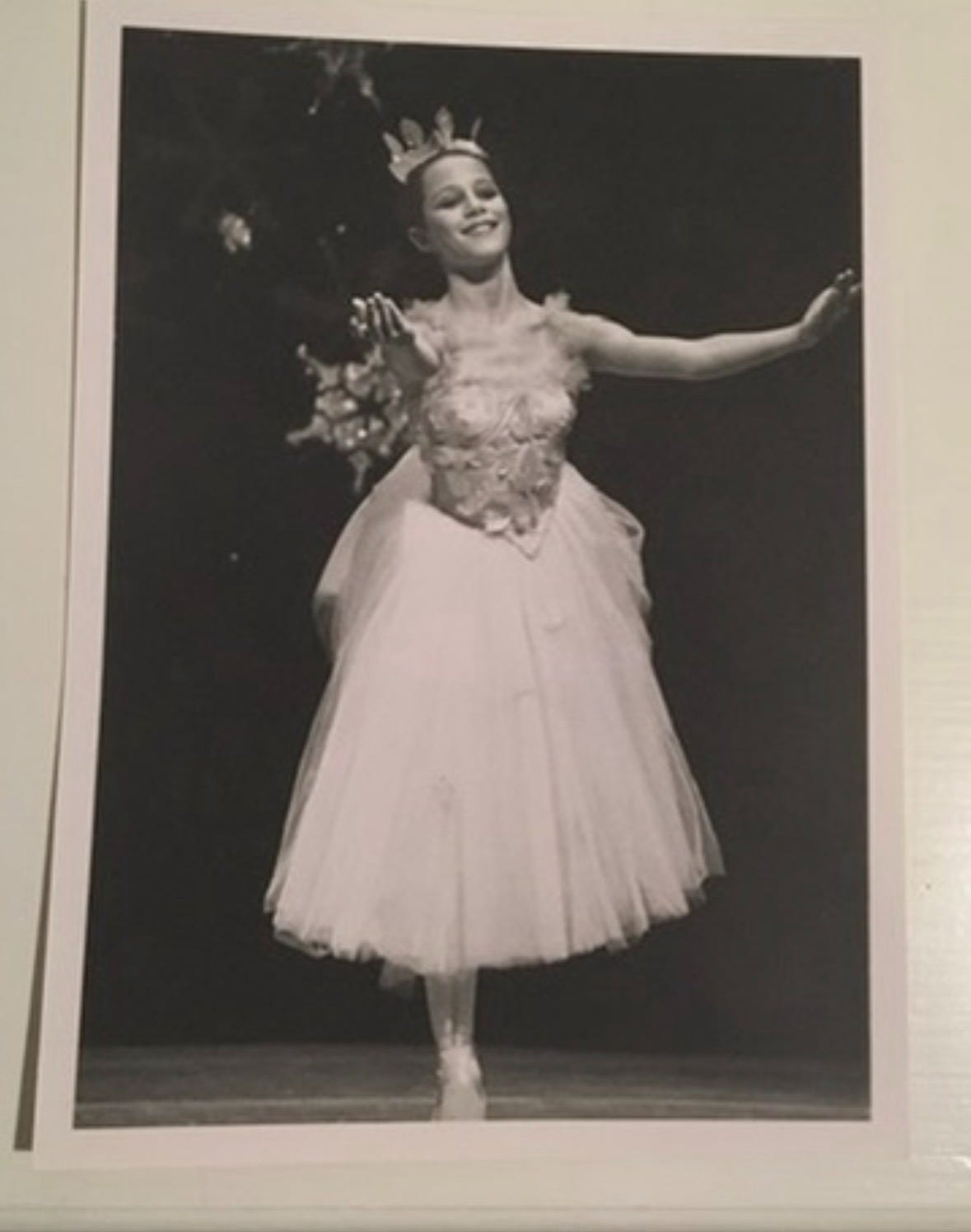
Yep, that’s me.
I’d spent 10 years dancing six days a week, through summers and holidays, sacrificing time off, a social life, and so much more, reaching higher and higher inside a very competitive, incredibly elite field that ruthlessly spits out talented hopefuls, and suddenly it was over. It had so defined me that when I quit I didn’t know who I was anymore. It was the most existentially lost I ever felt.
But as much as I chased it, and allowed it to consume me, it was also terrible for me in so many ways. The pressure, the body issues, the eating disorders, the abuse – it would be a lot for anyone to take, let alone adolescent girls who were already navigating the self-doubt and insecurities brought on by puberty.
It wrecked my feet, my back, my hips and knees. It may have even stunted my growth and impacted my reproductive health.
But I did get out, went off to college, and created a new identity and future, the one I think I was meant to have. I closed the door on ballet and very intentionally never looked back.
Now, though, as I’m getting older, the bitterness I’d felt toward ballet for so long is starting to soften. Through a lot of therapy and self-reflection, I can let go of the resentments I had for that chapter of my life, resentments over both what happened to me and what never did. You wouldn’t think I’d need 30 years of separation to finally make peace with it, but you’d be wrong.
Now, a thing I absolutely love doing is listening to all the classical music I grew up on. I’ve always loved it – it was quite literally the soundtrack of my childhood – but for years I wouldn’t dare listen to the great ballets I danced so many times – The Nutcracker, Swan Lake, Sleeping Beauty, Romeo and Juliet, In the Upper Room, Onegin, and so many more. They just brought up too many emotions.
Now, I’ll be the first to tell you that I think Tchaikovsky’s Nutcracker and Swan Lake are two of the most beautiful compositions to ever exist, and they are regulars in my rotation along with my favorites by Dvorak, Gershwin, Copland, Saint-Saens and Smetana.
When Chalamet’s comments exploded into the zeitgeist, I had complicated feelings.
At first, I approached it clinically – that was a really dumb thing to say a few weeks before the Oscars and of a community that is very much part of his own. Dancers of all kinds, choreographers, opera singers, composers, orchestras and symphonies all work in close concert with actors, directors and producers, of course. Without these artforms we wouldn’t have gotten a La La Land, a West Side Story, a Black Swan, a Moulin Rouge, a Sound of Music, a Wizard of Oz, a Dreamgirls, a Billy Elliot, a Dirty Dancing, a Singing in the Rain, a Saturday Night Fever, a Flashdance, a Footloose, an Amadeus.
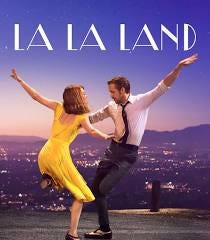
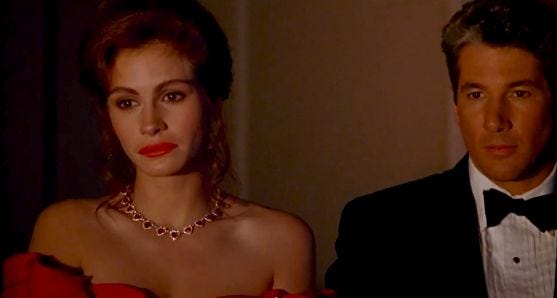
Apocalypse Now wouldn’t be the same without Wagner’s “Ride of the Valkyries” playing over the helicopter attack. Pretty Woman wouldn’t be the same without the opera scene. The Shawshank Redemption wouldn’t be the same without Mozart’s “The Marriage of Figaro” playing over the prison intercom.
To not have an understanding of the connectivity between these art forms, or a basic appreciation for the fine arts, all of which predate film and television, seems incredibly shortsighted and just plain ignorant – especially for an actor who at least purports to take his craft pretty seriously.
But I also thought, well, Chalamet is allowed to not like ballet or opera. Plenty of people just do not connect with those art forms. For 30 years even I didn’t like ballet. It’s certainly not a requirement to like ballet and opera be a successful actor – or win an Oscar.
And the coverage felt deeply unfair to other actors, most especially Michael B. Jordan, who was also up for an Oscar for Sinners. Stories like this one, from the New York Post, made it seem like Jordan could only win by default:
“‘[Chalamet’s] campaign for ‘Marty Supreme’ started it – the arrogance of his outfits, befitting a clown more than an Oscar winner. The lengths he will go to for hype…He reeks of Oscar desperation,’ one Hollywood insider added. Now, Jordan meanwhile, is the favorite to beat for ‘Sinners.’”
So Jordan can only win because of Chalamet’s bungling of the Oscar campaign? Not his talent?
On the other hand, the problem wasn’t that Chalamet said he didn’t like ballet and opera. It’s that he said, somewhat flippantly, “I don’t want to be working in ballet or opera, or you know, things where it’s like, ‘Hey, keep this thing alive,’ even though it’s like, no one cares about this anymore.”
Plenty of people care about ballet and opera. Which is what is keeping those art forms alive – not altruism. Opening night at The Met or New York City Ballet regularly sell out. People pay thousands of dollars to subscribe to ballet and opera seasons in a way they do not for films. They travel to other countries to watch people perform ballet and opera.
And of course, little girls all over the world take ballet lessons in hopes that they too may one day perform in The Nutcracker or Swan Lake.
But again, this feels like it was borne out of ignorance and not disdain. In my mind, Chalamet said something that was more dumb than offensive. The reaction to his comments, especially from Oscar-watchers, seemed disproportional.
Then again, he may just have helped ballet and opera embolden existing fans and find new audiences. Nearly every ballet and opera company has capitalized on the brouhaha, posting videos to social media and offering discounted tickets using special codes like “Timothee” and “Chalamet.”
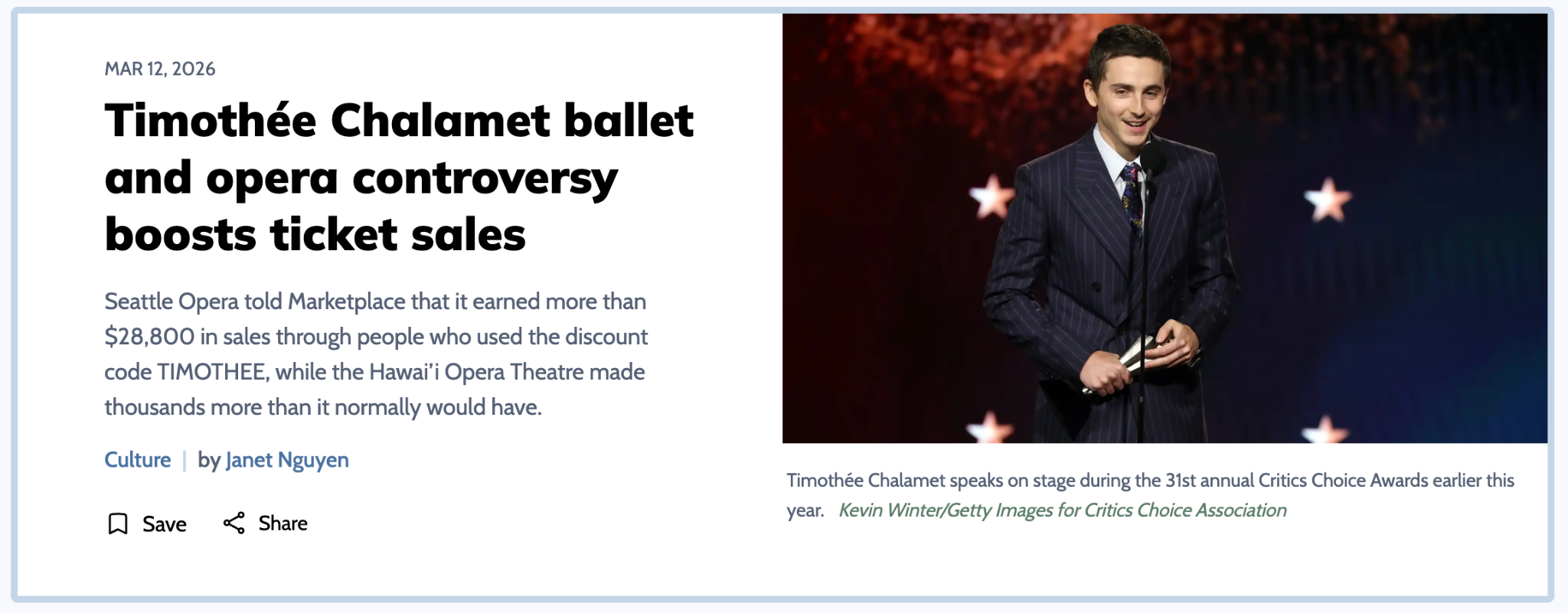
And it’s prompted other actors to share their connections to ballet and opera, with folks like Jonathan Bailey telling us his background in ballet heavily influenced his stage and screen work.
I actually think Chalamet did more for ballet and opera than anything else could have. It gave us all a reason to remember how important they both are – to the arts, to the culture, to our kids, and especially to television and film.
So while Chalamet may have tanked his Oscar chances or soured audiences on his brand, he inadvertently woke up a kind of Sleeping Beauty – one that decided it was time to stand up for ballet and opera in ways it never had to before.
To that, I say, bravo.
Lovely to journey with you S.E. Isn't it a pity to miss any opportunity to experience a connection with art in any form? One never knows what one will find, actually. Perhaps Chalamet doesnt like surprises?
SE, you’re still dancing. But with words. And you’re world class.